

How AI Is Reshaping Editorial Work Without Replacing Editors
- Laura Lee

- Jun 22
- 3 min read
How AI Is Reshaping Editorial Work Without Replacing Editors
By: Laura Lee
Understanding how AI is reshaping editorial work without replacing editors requires looking at how publishing workflows are evolving in practice. Artificial intelligence is no longer a future concept—it is already embedded in modern editorial systems, helping streamline repetitive tasks while improving overall efficiency.
From automated grammar correction and style suggestions to content structuring and metadata tagging, AI tools are increasingly handling technical aspects of editing. However, this shift does not reduce the importance of human editors. Instead, it allows them to focus on higher-level responsibilities such as narrative development, tone refinement, and creative decision-making.
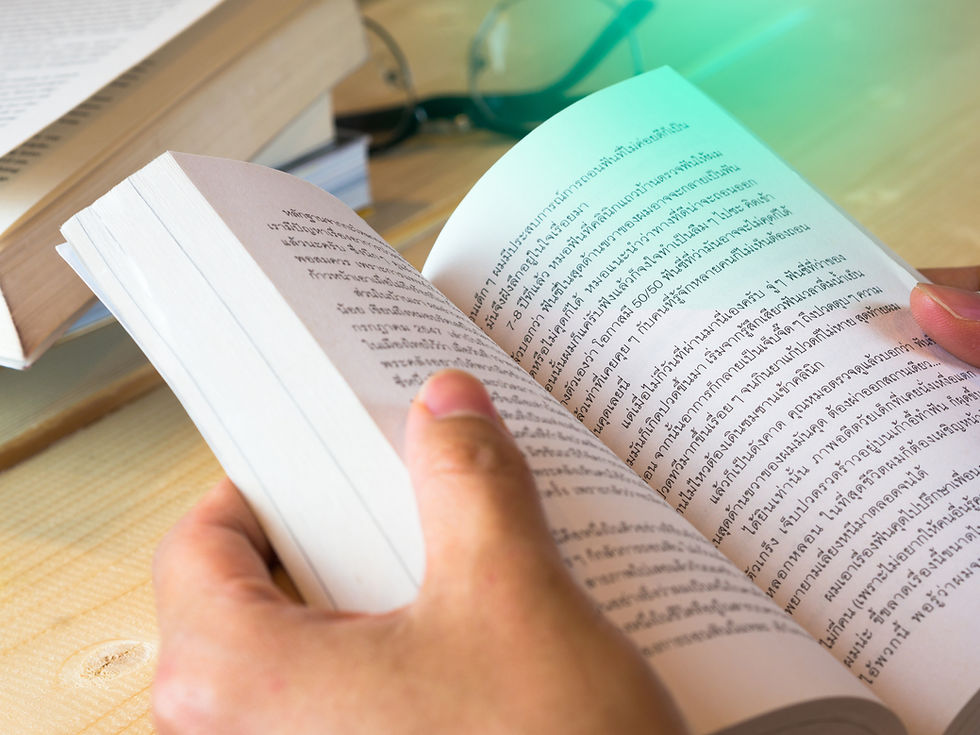
At Lauxon Publishing, this shift is not viewed as disruption, but as evolution. Editorial work is becoming faster, more precise, and more collaborative, while still relying on the irreplaceable human judgment that defines quality storytelling.
From Manual Editing to Assisted Intelligence
Traditionally, editorial work involved painstaking manual review, line-by-line proofreading, structural editing, and consistency checks. These tasks required time, focus, and multiple revision cycles.
Today, AI tools assist with:
Grammar and syntax correction
Style consistency checks
Plagiarism detection
Summarization and content tagging
Manuscript organization and indexing
But while AI can identify patterns, it cannot understand intent, tone, or emotional depth in the way a human editor can. This is where editors remain essential.
The Editor’s Role Is Expanding, Not Disappearing
Rather than replacing editors, AI is shifting their responsibilities upward in the creative process. Editors are spending less time on mechanical corrections and more time on:
Narrative development and pacing
Voice refinement and tone alignment
Cultural sensitivity and context review
Structural storytelling decisions
Author collaboration and coaching
In other words, editors are becoming strategic partners in storytelling, not just technical reviewers.
Why Human Judgment Still Matters Most
AI can analyze text, but it does not truly understand meaning.
A sentence may be grammatically perfect but emotionally flat. A paragraph may be coherent but fail to connect with readers. Editors bridge this gap by applying intuition, experience, and literary sensitivity.
At Lauxon Publishing, editorial teams ensure that every manuscript retains:
Authentic voice
Emotional resonance
Narrative clarity
Reader engagement
These are qualities no algorithm can reliably replicate.
A Hybrid Workflow: The New Industry Standard
Modern publishing workflows are increasingly hybrid:
AI-assisted drafting and review
Editorial refinement and human oversight
Collaborative revisions between author and editor
Final quality control by human editorial teams
This structure improves efficiency without sacrificing quality. AI accelerates production, while editors safeguard meaning and craft.
Opportunities for Authors and Publishers
For authors, this shift means faster feedback cycles and clearer guidance during revisions. For publishers, it means improved scalability and consistency.
However, the real opportunity lies in balance: using AI to enhance productivity while preserving the artistry of publishing.
At Lauxon Publishing, the goal is not automation for its own sake, it is amplifying human creativity through intelligent tools.
The Future: Collaboration, Not Replacement
The fear that AI will replace editors misunderstands the nature of editorial work. Editing is not just correction, it is interpretation, refinement, and storytelling judgment.
AI may become faster and more capable, but it does not replace taste, empathy, or narrative intuition.
The future of publishing is not human versus machine. It is human with machine.
And in that partnership, editors remain at the center, guiding stories, shaping voices, and ensuring that every book still feels unmistakably human.


Comments